
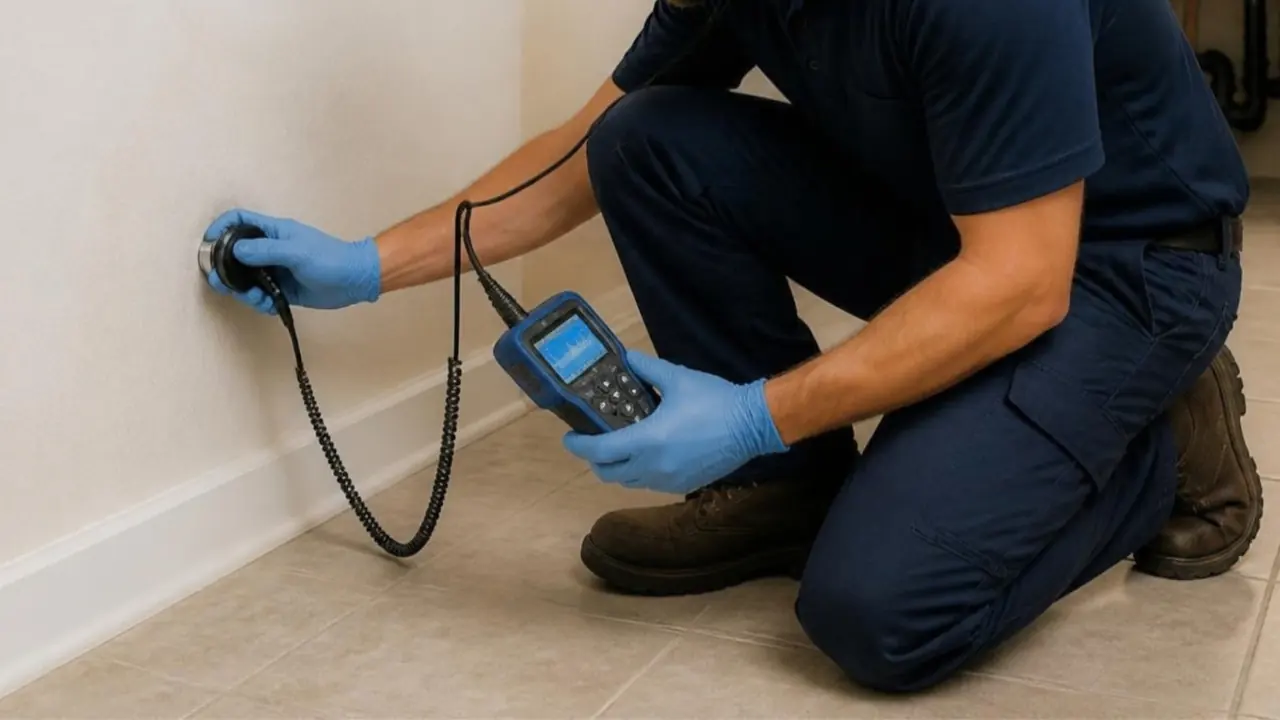
How listening finds a leak
Water escaping from a pressurized pipe makes noise. The sound travels along the pipe and through the surrounding material, and sensitive microphones and ground sensors can pick it up. Acoustic leak detection uses that sound to locate the leak without opening floors or walls.
It works best on pressurized supply lines, and it is one tool among several. A good tech combines it with a pressure test, a moisture meter and sometimes a thermal camera, so the answer rests on more than one clue.
What the process looks like
- Confirm there is a leak
We check the meter with all fixtures off and see if it still moves.
- Narrow the zone
Isolation valves and pressure tests tell us which section of the system leaks.
- Listen
Sensors on the floor, wall and pipe pick up the sound and its strongest point.
- Confirm and mark
A second method confirms the spot before anything is opened.
Learn more about the service on our leak detection page.
What acoustic tools do well and what they do not
| Tool | Good at | Limits |
|---|---|---|
| Acoustic sensors | Pressurized supply leaks | Noise from traffic or pumps interferes. |
| Moisture meter | Confirming wet material | Does not find the source. |
| Thermal camera | Hot water leaks and wet areas | Needs a temperature difference. |
| Pressure test | Proving a leak exists | Does not locate it. |
| Camera inspection | Drain and sewer lines | Does not find supply leaks. |
Talk to a plumber about acoustic leak detection
Call the 24/7 line and describe your situation. We will say what we would check first.
Where it works best
Slab leaks are a classic case. A line in concrete is noisy when it leaks, and sensors on the floor can trace the sound to a point. See slab leak repair for what comes next.
It is also useful for leaks in walls, under yards and in service lines between the meter and the house, where digging blind would waste time and money.
What to do before we arrive
- Turn off appliances that use water, including the ice maker and the irrigation timer.
- Note the meter reading, wait an hour with all water off and check again.
- Keep the house quiet during the visit if you can.
- Tell us where you see damp spots, warm floors or mold.
Accurate notes shorten the visit and reduce the number of holes.
What the results look like
At the end of a detection visit you should have a marked location, a description of how it was confirmed and an explanation of what the repair would involve. If the leak is in a wall or under a slab, we tell you the likely opening size.
If the first method is not conclusive, we say so and use another one. We would rather take a second look than open the wrong spot.
Why a small leak still matters
Even a slow leak can run for months. Water leaves minerals, softens drywall and feeds mold. It also raises your bill and can erode the soil under a slab or a pipe.
Finding it early, when the repair is small, is nearly always cheaper than waiting for the visible damage. See water service line repair if the leak is between the meter and the house.
How long a detection visit takes
A simple case, such as a single leaking line in an accessible wall, can be found in a short visit. A slab leak in a house with several branches takes longer because each line must be isolated and tested.
We tell you at the start what the plan is and update you as the answer narrows. Ask us to show you the readings, because seeing the sensor spike at one point helps you understand why we mark where we do.
Questions people ask about the equipment
Does it hurt the pipes? No. The sensors only listen. Does it need the water off? No. The system must be under pressure for a leak to make noise, so we test with the supply on.
Can it find a leak in a plastic pipe? Plastic carries sound differently from metal, so the signal is weaker and the tech relies more on pressure testing and moisture tools. We choose the mix of methods that fits the pipe in your house.
A local note for North Miami Beach homes
Most of the area has slab-on-grade homes, which means supply lines can run in or under the slab. A warm spot on a floor or a meter that runs with everything off are common first signs. If you rent or own a condo, tell management before any opening is made.
NMB Water says its service-line inventory found no lead service lines in the city system, but leaks and old pipe are still possible in household plumbing. Our two nearest service areas are North Miami and Aventura.
Once a leak is located, repair work falls under the Florida Building Code, Plumbing, which is built on the 2021 International Plumbing Code (IPC) with Florida amendments.
Questions about this topic
Often yes, for pressurized lines. A second method confirms the spot.
Only after the leak is located, and the opening is kept as small as practical.
No. Drain leaks are better checked with a camera or a dye test.
Turn everything off and see if the dial or low-flow indicator moves.
You can sometimes hear a hiss, but locating it takes equipment.
Want a plumber to look at it?
Call the line and describe what you see. We will say what we would check first.