
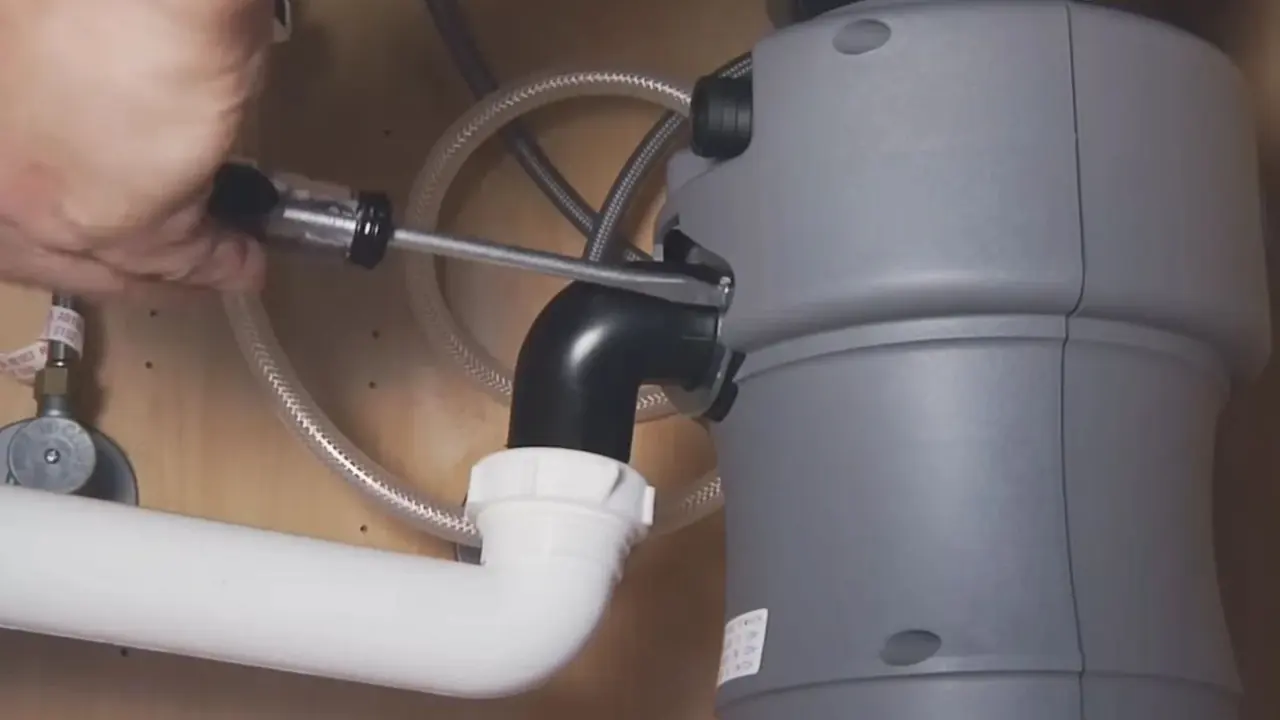
What a disposal install really includes
A garbage disposal mounts to the sink drain opening and grinds food into small pieces that flow out with the water. It connects in three places: the sink flange at the top, the drain line at the side and a power supply. A dishwasher drain often connects to a port on the side as well.
A swap of a like-for-like unit is straightforward. A new install where none existed is bigger, because it may need an outlet or a switch, a different trap arrangement and sometimes a double-bowl sink drain rework. Knowing which job you have saves a surprise on the bill.
The pieces and how they connect
- Mounting assembly
The sink flange sits in the drain opening with a plumber's putty or gasket seal, and a mounting ring locks the disposal to it.
- Discharge outlet
A short pipe connects the side outlet to the trap, and every joint must be tight and sloped toward the drain.
- Dishwasher inlet
If a dishwasher drains here, the knockout plug in the port must be removed first.
- Power
A cord to a grounded outlet or a hardwired connection through a switch.
The trap and drain run must slope to carry waste away. A level or uphill run leaves water standing and soon smells.
Common mistakes in a do-it-yourself install
- Forgetting to knock out the dishwasher port plug, so the dishwasher backs up.
- Over-tightening the mounting ring and cracking the flange or gasket.
- Leaving the putty thin or uneven so the sink leaks into the cabinet.
- Connecting power live or with no switch the user can reach.
- Setting the trap too high so the line holds water.
A leak under the sink often shows up days later, when the cabinet floor swells. If you want a pro, see garbage disposal repair and installation.
Talk to a plumber about garbage disposal installation
Call the 24/7 line and describe your situation. We will say what we would check first.
Choosing a disposal
| Feature | Why it matters | What to check |
|---|---|---|
| Motor size | More power handles more waste | Match to household use. |
| Feed type | Continuous feed or batch | Preference and safety. |
| Noise insulation | Reduces sound in an open kitchen | Look at the rating. |
| Materials | Stainless parts resist corrosion | Check the grinding chamber. |
| Warranty | Shows maker confidence | Read what it covers. |
When to stop and call us
If the disposal hums but does not spin, it is usually jammed. Switch it off at the wall and never put your hand in. Most units have a hex socket on the bottom for turning the plate by hand, and a reset button for overload.
If the sink leaks at the flange, the line backs up, or the unit trips a breaker, stop and call. A jam that repeats may point to a drain problem rather than the disposal.
How to use a disposal so it lasts
- Run cold water before, during and for a short time after grinding.
- Feed scraps in small amounts rather than one big load.
- Avoid grease, fibrous peels, bones, pits, coffee grounds and starchy foods like rice and pasta.
- Never put your hand inside, even when it is off.
These habits prevent most jams and drain clogs downstream.
Odors and cleaning
A disposal smells when food residue sits on the grinding chamber and the underside of the splash guard. Scrub the guard with a brush and dish soap, and grind a few ice cubes with citrus peel to scour the chamber.
A smell that does not go away may come from a dry or poorly sloped trap, or from the drain line itself. At that point a plumber should look at the whole sink drain, not only the unit.
What the final test should show
After installation, fill the sink with a few inches of water, release it and check every joint with a dry paper towel. Run the disposal with cold water and watch the line for drips. If a dishwasher is connected, run a short cycle and confirm it drains.
We do all of this before we leave, and we show you where the reset button and the hex socket are.
A local note for North Miami Beach homes
In condos and townhomes, the shared drain stack takes everything from your sink. Heavy fats and fibrous scraps can load the stack, and some associations restrict disposal use. Check your declaration before you install, and ask management whether your building allows one.
NMB Water notes that its water is disinfected with chloramine, and nothing in a disposal install depends on that, but fixtures with rubber parts should be rated for it. Ask the manufacturer if you are unsure. Our two nearest service areas are North Miami and Aventura.
The trap and drain for a disposal fall under the Florida Building Code, Plumbing, which is based on the International Plumbing Code (IPC). The wiring falls under the electrical code.
Questions about this topic
Rules vary by municipality and by building. Ask the building department that covers your address.
Many septic owners avoid them. Ask your septic service first.
The knockout plug in the dishwasher port may still be in place.
A like-for-like swap is usually quick. A new install takes longer.
Some declarations restrict them. Read yours or ask management.
Want a plumber to look at it?
Call the line and describe what you see. We will say what we would check first.