
Is it the thermostat or something else
On an electric tank, thermostats switch the heating elements on and off. Most tanks have two, an upper and a lower, each with its own element. When one fails, the symptoms depend on which one it was. A failed upper thermostat usually means no hot water at all. A failed lower one often means a small supply of hot water that runs out quickly.
A thermostat that sticks in the on position is more serious. The water keeps heating, the relief valve may open, and the tank can become dangerous. If water at your tap is too hot to touch, switch the heater off at the breaker and call.
Safety first: what you must do before anyone opens a panel
- Switch the heater off at the breaker. Do not trust the switch on the unit.
- Confirm the power is off with a meter before touching any wire.
- Never reset the high limit switch repeatedly. It tripped for a reason.
- If the relief valve is discharging, close the cold supply and call us right away.
Working on live wiring is the most dangerous part of this job, and we ask homeowners not to do it. The steps below explain what the plumber does so you know what to expect.
How a thermostat failure is diagnosed
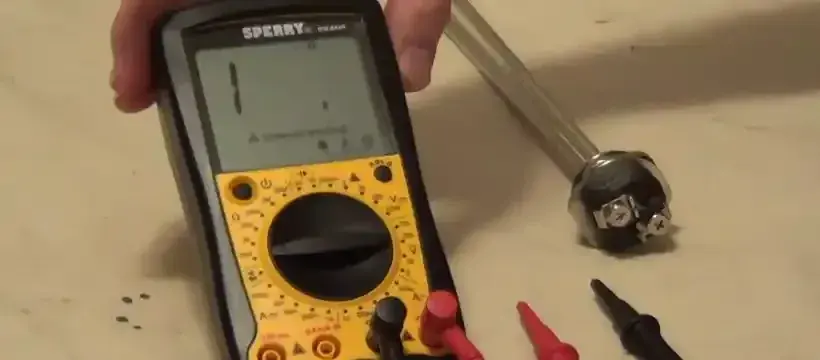
We turn the power off, remove the panels and insulation and test each element for resistance and each thermostat for continuity. A meter tells the difference between a dead element and a dead thermostat in a few minutes.
We also check for a tripped high limit, loose wiring, scorched terminals and signs of water inside the panel. Wet insulation points to a leak, and that is a replace decision rather than a repair. Our water heater repair page lists other causes of lukewarm water.
Talk to a plumber about water heater thermostat replacement
Call the 24/7 line and describe your situation. We will say what we would check first.
Symptoms and likely causes
| Symptom | Likely cause | Repair size |
|---|---|---|
| No hot water at all | Upper thermostat, element or high limit | Small. |
| Hot water runs out fast | Lower element or thermostat | Small. |
| Water far too hot | Stuck thermostat | Small, but urgent. |
| Breaker trips repeatedly | Shorted element or wiring | Small to medium. |
| Water at the base of the tank | Failed tank body | Replacement. |
Replace the thermostat or the whole heater
A thermostat is an inexpensive part, and a repair is reasonable when the tank is not leaking and is not near the end of its expected life. The label shows the build date in its serial number, and we can read it for you.
Replace the heater when the tank body leaks, the unit is old and has had several repairs, or the lower half is heavily scaled with sediment. See water heater replacement for what that visit looks like.
Setting the temperature after the repair
Hot water that is hot enough prevents bacterial growth in the tank, and hot water that is too hot scalds. Households with small children or elderly members often choose a lower setting plus a mixing valve at the heater.
Ask us to explain the setting and the mixing options when we finish. We set the thermostat, confirm the tap temperature and explain the controls.
What a thermostat repair costs you in time
The part is small and the work is usually quick once the diagnosis is done. Most of the visit is testing, because replacing a part that was not the problem wastes your money and leaves you without hot water.
We bring common thermostats, elements and high limit switches so a repair can often finish in one visit. When the label shows an unusual model, we may need to order the part, and we tell you before we leave.
How long a thermostat lasts
Thermostats wear from heat cycles and from moisture that gets into the panel. Their life varies, and most are not the first part to fail on a well-kept heater. Elements and anodes tend to go first.
If the thermostat has failed on a heater with a leaking tank or heavy sediment, replacing the whole heater is often the better use of money.
A local note for North Miami Beach homes
NMB Water's 2025 report says brown or yellow water can signal rust or aging pipe, and it advises flushing your heater and plumbing at least twice a year. Sediment sits on the lower element and insulates it, so a flush can make a lower element last longer.
If your water heater is in a garage or closet, tell us where the breaker is when you call so we can confirm power is off. Our two nearest service areas are North Miami and Aventura.
Heater safety devices such as the relief valve are required by the International Plumbing Code (IPC), on which the Florida Building Code, Plumbing is based.
Questions about this topic
We advise against it. It involves live wiring and a water-filled tank, and a mistake can cause shock or a fire.
A failed lower thermostat or element is a common cause, and sediment can also reduce the usable hot water in a tank.
Yes, it can scald. Turn the power off and call.
Yes, as part of its gas control valve, and the repair is different from an electric element job.
Not directly, but sediment shortens the life of elements, so flushing helps.
Want a plumber to look at it?
Call the line and describe what you see. We will say what we would check first.