
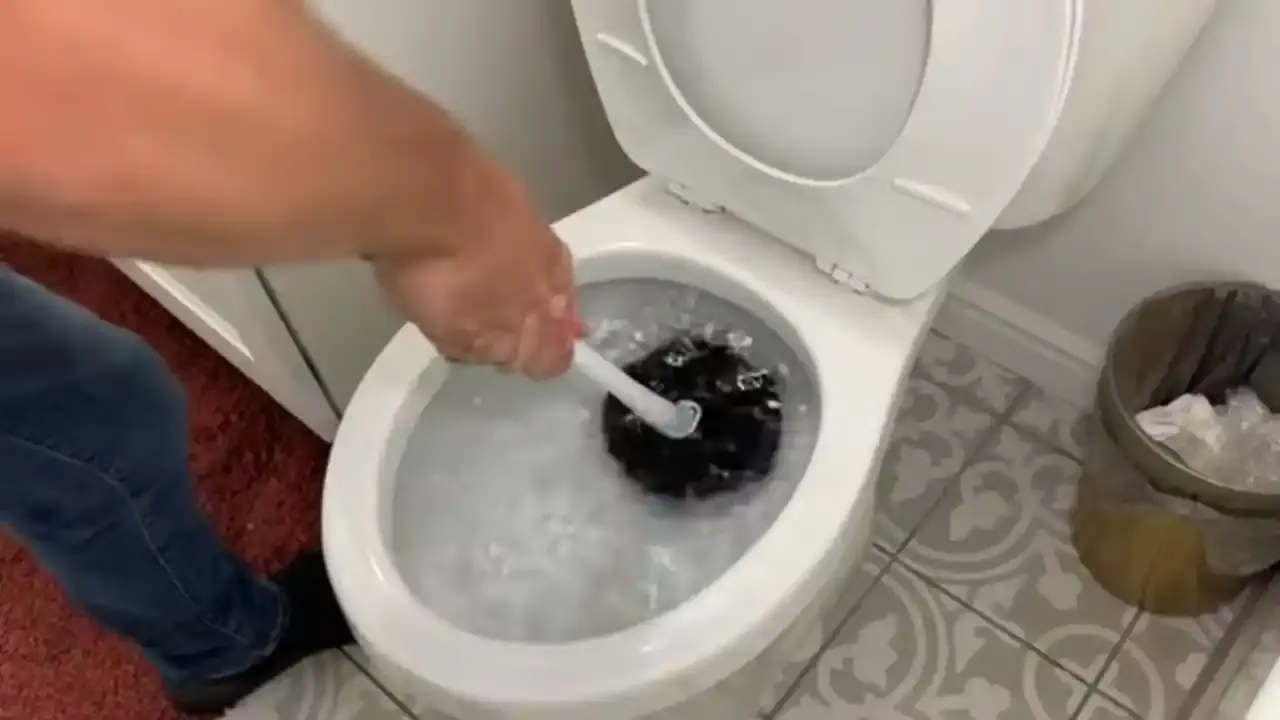
A clog rarely fixes itself
It is tempting to leave a clogged toilet and hope it drains. Sometimes a soft clog does loosen, but a solid blockage will not. Waiting turns a simple fix into a risk of overflow every time someone uses the bathroom, and it gives others in the house a reason to flush by mistake.
There is also the matter of what the water carries. Standing toilet water is not clean, and an overflow spreads bacteria across the floor and into the subfloor.
What can go wrong over time
- The bowl overflows when someone flushes, soaking the floor.
- Water seeps under tile and into the subfloor, where it can rot wood.
- Odors build up, and sewer gas can enter the room if the seal is disturbed.
- The clog compacts and becomes harder to clear.
- A clog further down the line can back up into tubs and floor drains.
If more than one fixture is affected, the problem is probably the main line, not the toilet. See drain cleaning.
What to do right away
- Do not flush again
Another flush can overflow the bowl.
- Close the supply valve
Turn the valve behind the toilet clockwise to stop the tank refilling.
- Use a flange plunger
Press slowly to push the clog loose, then pull to draw it back.
- Try a closet auger
An auger reaches the trap if a plunger fails.
Wear gloves and put towels down. If the water rises, lift the tank lid and press the flapper closed.
Talk to a plumber about toilet clogged too long
Call the 24/7 line and describe your situation. We will say what we would check first.
Common causes of a clogged toilet
| Cause | Sign | Fix |
|---|---|---|
| Too much paper | Slow drain, then stop | Plunger. |
| Wipes and swabs | Repeated clogs | Auger or removal. |
| Toys and objects | Sudden full stop | Auger or pulling the toilet. |
| Main line clog | Several fixtures slow or gurgling | Camera and cable or jet. |
| Roots in the line | Repeat backups | Cable, jetting or repair. |
When to call a plumber
Call if the plunger and auger do not work, if the water rises quickly, or if other fixtures are affected. Do not pour chemical drain cleaner into a toilet. It can sit in the bowl and splash on whoever tries again.
Our toilet repair and installation page covers when we pull and reset a toilet to remove an object.
How to use a plunger correctly
Use a flange plunger, the kind with a rubber sleeve that fits the drain. Make sure there is enough water to cover the cup. Seat it over the drain and press down slowly to avoid splashing, then pull up sharply. Repeat for about a dozen cycles.
If the water drains, flush once to test. If it does not, wait a minute and try again. If three tries fail, stop and use an auger or call us.
What a plumber does that you cannot
We can pull the toilet and clear the trap from the bottom, run a cable into the line, or use a camera to see the cause. We also check the wax ring and flange when we reset the toilet, so it does not leak after the repair.
If the cause is a main line clog, we clear it and explain whether a repair is needed. See sewer line cleaning for what that visit includes.
Cleaning up after an overflow
Turn off the water at the toilet valve, then remove standing water with towels or a wet vac. Disinfect hard surfaces with a household disinfectant and throw out porous items that were soaked. Dry the area for at least a day with fans.
If water reached the subfloor or a ceiling below, call a plumber and consider your insurer. Moisture left behind can grow mold within a few days.
Preventing the next one
Teach everyone in the house what belongs in the toilet. Keep a bin with a lid in the bathroom for wipes and other items. Do not use too much paper at once, and keep a plunger within reach.
If the toilet is old and flushes weakly, a newer model may handle waste better. See our toilet repair and installation page for upgrades.
A local note for North Miami Beach homes
In condos and townhomes, a backup in one unit can come from a shared stack. If neighbors report slow drains as well, tell the building manager right away. In older single-family houses, repeat clogs often come from a root-damaged lateral.
The NMB Water report stresses that water quality depends on household plumbing, so a flooded bathroom that involved old pipe is a good time to have the pipe checked. Our two nearest service areas are North Miami and Sunny Isles Beach.
New toilets must meet flush volume limits in the Florida Building Code, Plumbing, which is based on the International Plumbing Code (IPC).
Questions about this topic
Yes. An overflow can reach the subfloor and cause rot.
Yes, with a flange plunger and gloves.
The toilet may be slow, or the line may have roots. A camera can tell.
Very hot water can crack porcelain. Use warm water.
Tell building management if the problem might be in a shared stack.
Want a plumber to look at it?
Call the line and describe what you see. We will say what we would check first.